


elicer diaz red gesha
elicer diaz red gesha
Couldn't load pickup availability
We no longer offer an espresso grind size; this is because we cannot guarantee it will be correct for every machine.
FAR FROM ORDINARY…
farmer: sliced Diaz
farm: ep Cedric
region: huabal, Jaen, Peru
process: natural
variety: gesha
cup profile: white peach - passion fruit - jasmine
This naturally processed Red Geisha from Elicer Diaz is one of those coffees. Grown high in the mountains of Northern Peru, it bursts with vibrant tropical fruit, elegant florals and remarkable clarity. The careful natural processing enhances the coffee's sweetness while allowing the delicate character of the Red Geisha varietal to shine. Expect an expressive cup full of fragrant florals, passionfruit and juicy peach all carried by a silky body and a remarkably clean finish.
BREW GUIDE BELOW
**IMPORTANT SHIPPING INFO**
ALL PACKAGES ARE SENT TRACKED 24 or TRACKED 48 (UK ONLY)
PURCHASE ANY 2+ BAGS TO GET A SHIPPING UPGRADE TO TRACKED 24
Brew Guide Below
Temperature
Temperature
For pour-over filter methods, aim for the mid 80’s. We are aiming to preserve the sweetness of these coffees. Espresso, aim for lower 90’s.
Ratios / dose / bloom
Ratios / dose / bloom
Pour over:
Larger doses, smaller water ratios.
Initiate a bloom with minimal water, leave for up to a minute then start your pulse pours to the desired amount.
Espresso:
For larger doses, aim for a slightly larger yield than a 1:2 ratio but again cater to your taste. Use a pre-infusion if possible. Aim for an extraction in the mid-20 seconds.
Rest periods
Rest periods
Please ensure a rest period of at least 3 weeks for ALL brew methods; each coffee will be different in terms of rest needed. All our coffees will benefit from a substantial rest period of anywhere from 3-6 weeks (!) Ideally, you will grind what coffee you need and not keep pre-ground coffee for any length of time. Espresso generally needs a longer rest period than filter coffees, to fully de-gas and settle.
Freezing
Freezing
Please don’t freeze our coffees, it’s largely to do with the nature of the rest periods needed to develop profiles. As soon as a coffee is frozen, the development stage stops.



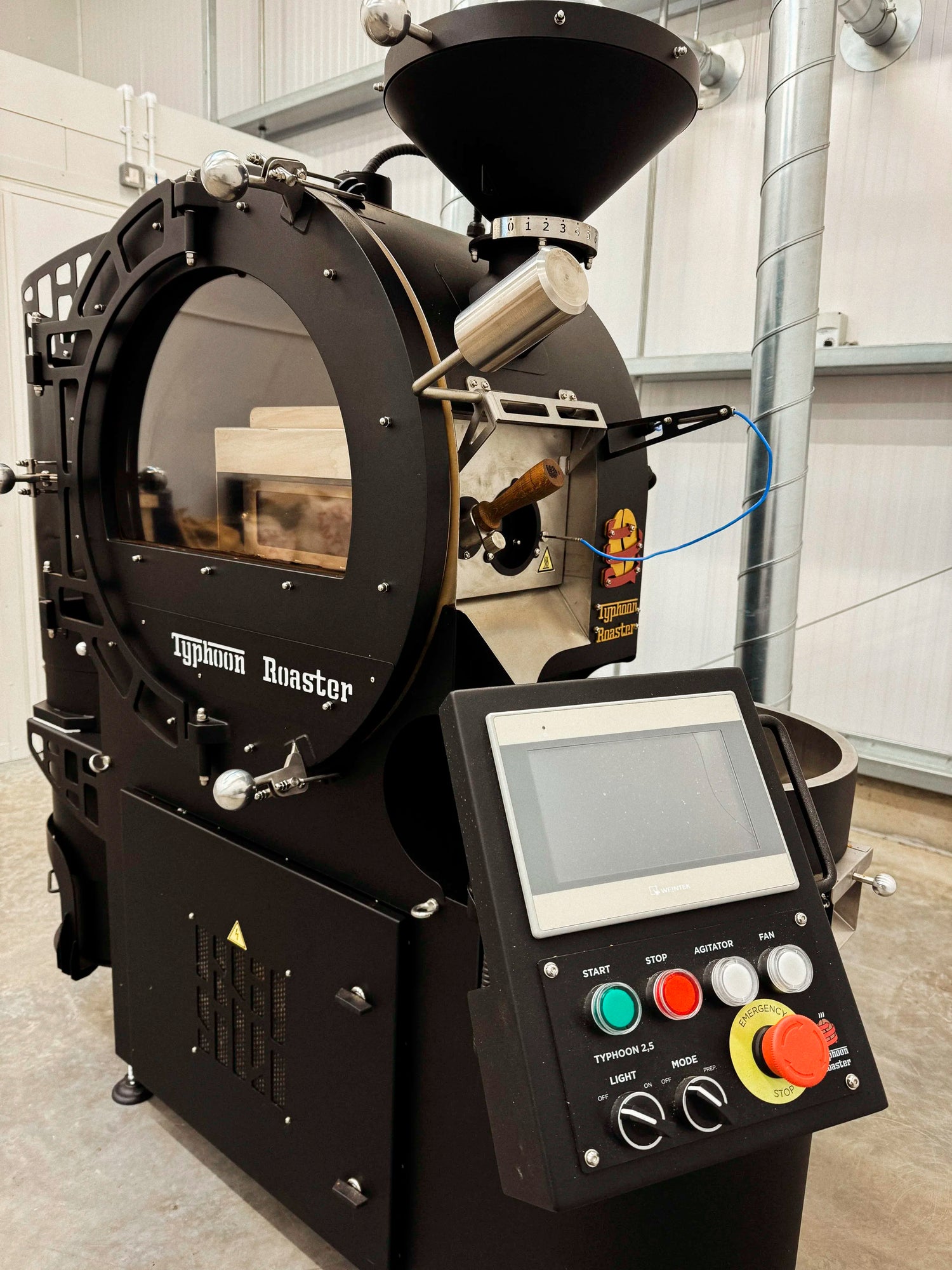
our process
we roast coffee in Livingston, near Edinburgh. Our roaster of choice is a typhoon fluid bed roaster. All electric.
all our coffees are rested before selling, to ensure they have developed fully before brewing. Optimal drinking is around the 3 week past roast date mark, although each coffee is uniquely different.
Coffee Info
Good to know
Roast Dates
We roast our coffees fresh every week so they can be enjoyed at their best – after a short rest. Following roasting, beans release CO₂, and their flavours gently settle, which is why we recommend letting them rest before brewing. For all brew types, they are best left for 3-4 weeks post-roast for optimum flavour. Store your coffee in a cool, dark place in a sealed bag or airtight container, and you’ll taste the clarity, sweetness, and balance that proper resting brings.
How our coffee gets to you
Otherwise known as Shipping and Despatch - we use Royal Mail if shipping in the UK and UPS if shipping abroad. We aim to ship off ASAP after purchase. This is different for pre-orders or some limited runs, so be sure to either check the product page, or ask!
Unsure about something?
If you want clarity on anything or some help with brewing methods, just get in touch. No such thing as a stupid question...
Best place to reach us is on Instagram, through the website or andrew@thesourcecoffee.co.uk